The only part
you replace
is the tip.
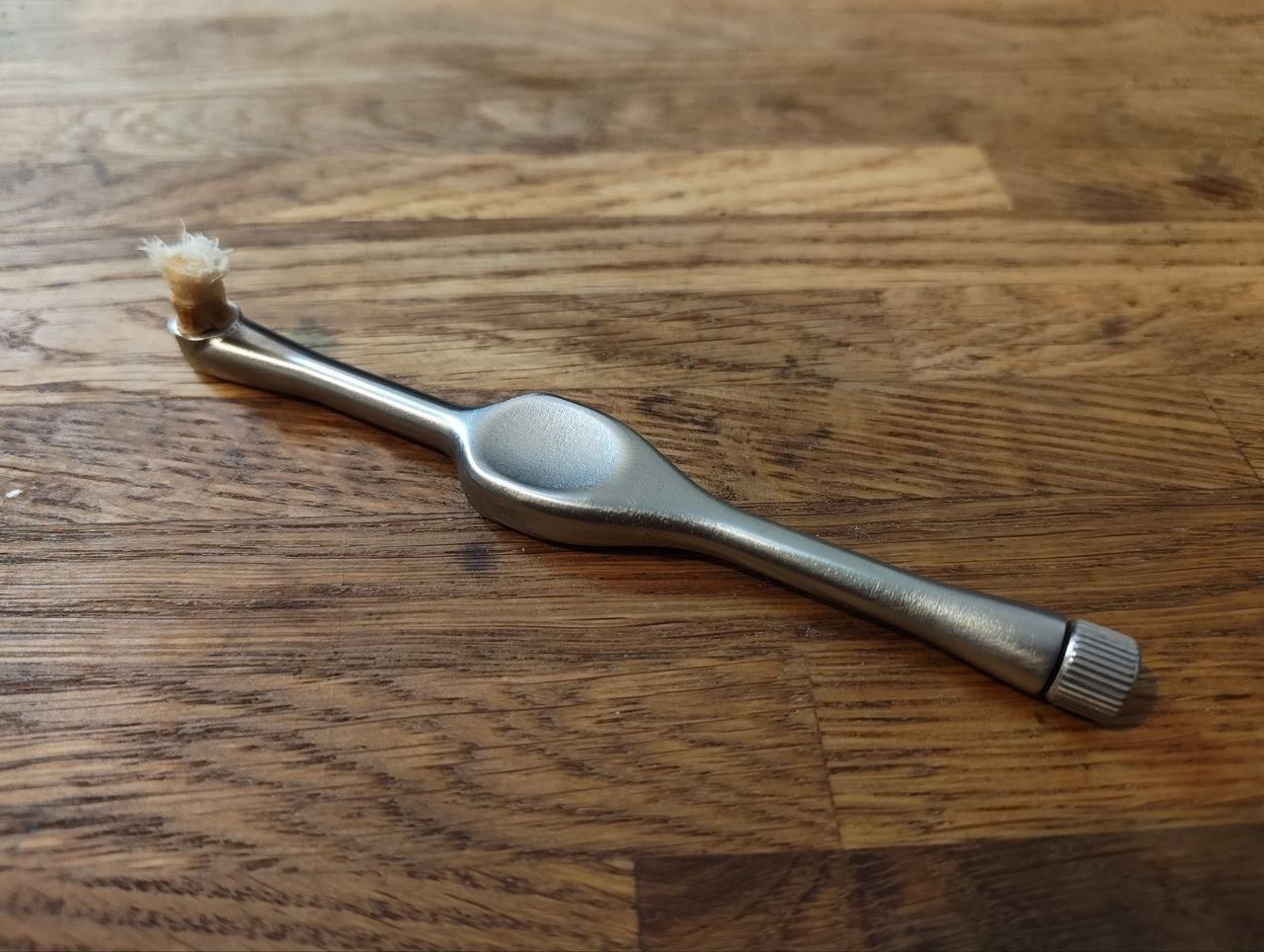
A toothbrush handle built from stainless steel — body, draw rod, and clamp screw, no plastic anywhere. The head clamps a trimmed miswak twig in place of bristles — swap the tip every few weeks, keep the handle for good.
How it clamps
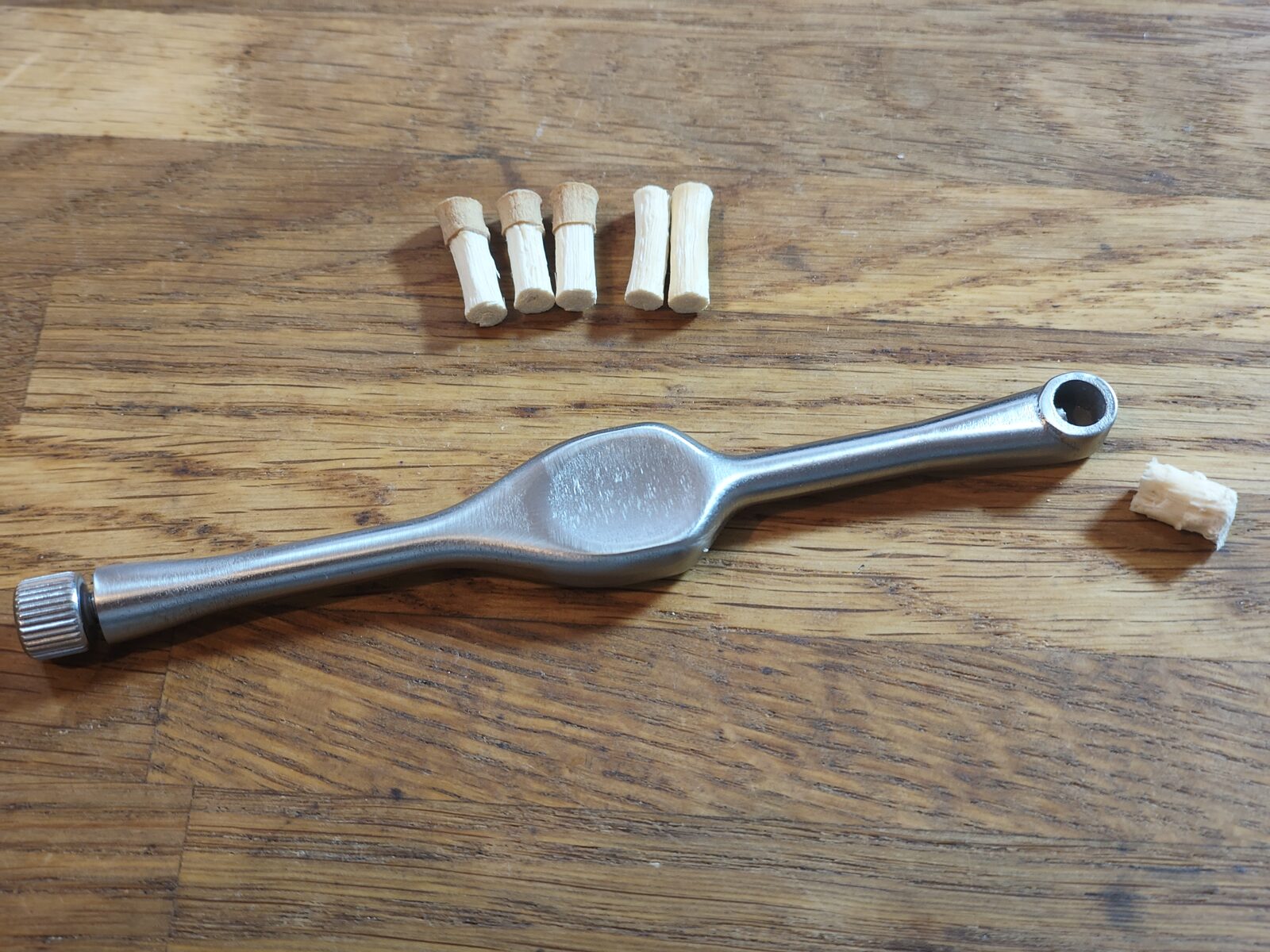
Turn the knurled collar at the tail and the jaws at the head open. Set a fresh miswak tip in place, turn it back, and it's held as firmly as the last one was.
Construction
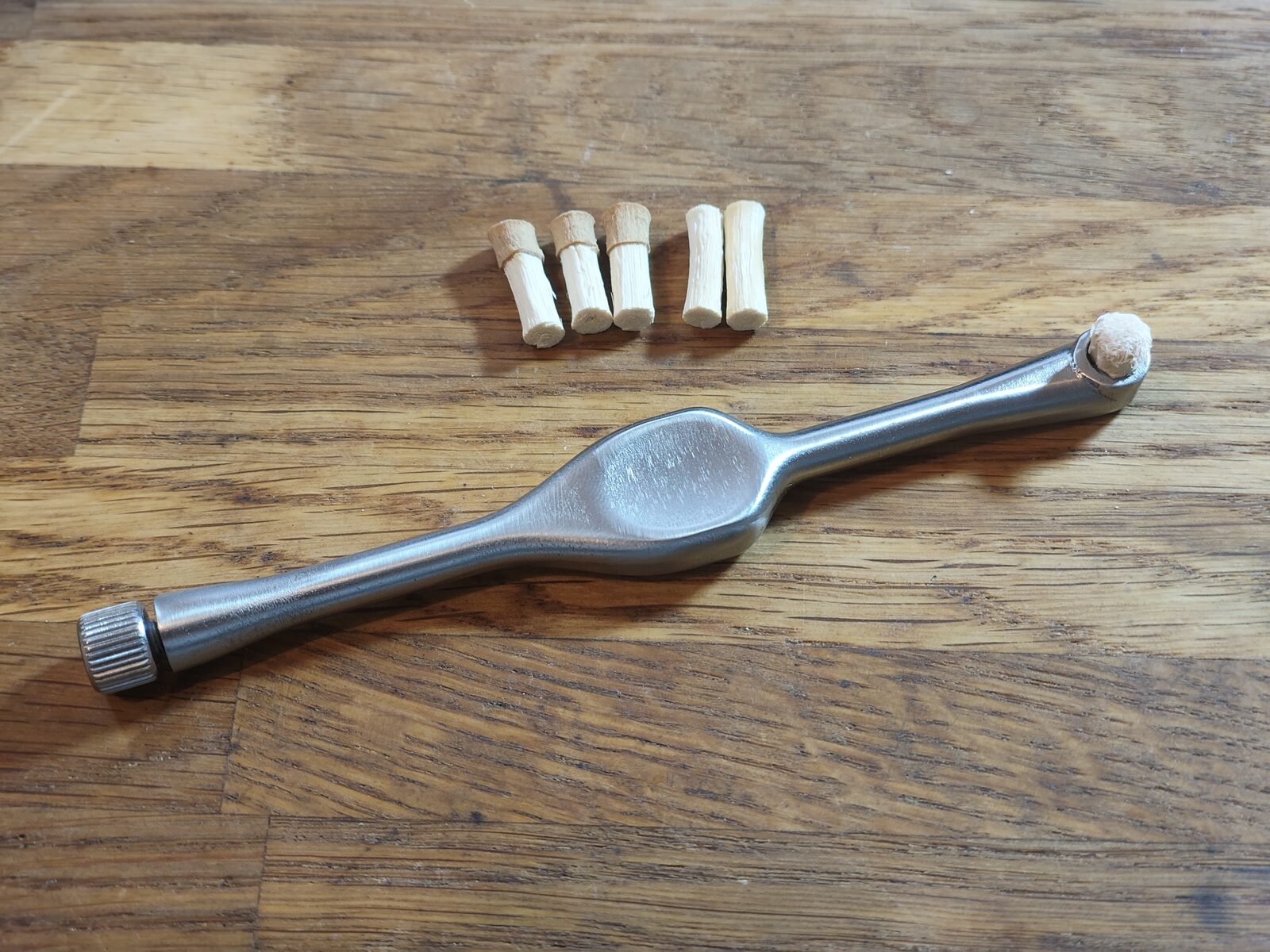
Stainless steel throughout — the handle body, a slender draw rod running its length, and the screw that locks it. No plastic, no glued seams, nothing that yellows or cracks. The waist is turned down thin enough to flex slightly in the hand; the bowl in the middle is a rest for your thumb, not decoration. Turning the knurled nut at the tail draws the rod back, opening the jaws at the head.
The prototype shown was 3D-printed in steel (SLM) and hand-sanded and polished afterward. Whether the production run is printed, machined, or cast — and its alloy and finish — is still being decided.
| Handle body | Stainless steel, SLM-printed & polished |
|---|---|
| Draw rod | ⌀ 3 mm × 100 mm, stainless steel |
| Fastener | Stainless steel screw |
| Head | Draw-rod collet, hand-tightened |
| Length | 115 mm |
| Grip width | 18 mm |
| Shaft | ⌀ 6–9 mm, tapered |
| Mass, assembled | 46 g* |
| Replacement tip | Miswak (Salvadora persica), hand-trimmed |
*Weighed on the assembled prototype (handle, rod, and screw together) — production mass will depend on the manufacturing process chosen.
Why buy once
A plastic toothbrush gets replaced every few months and thrown away whole — handle, bristles, packaging. This one keeps the handle. The only thing you ever throw away is a twig.
Miswak has been used to clean teeth for thousands of years, long before synthetic bristles existed. Trim the frayed end off a fresh piece, work it soft between your teeth, and it splits into a natural brush of its own.
The steel doesn't wear out. If it ever needs it, it can be resurfaced or polished rather than replaced.